New framework establishes an “architecture of constraint” for corporate boards, addressing the strategic risk of reallocating decision rights to autonomous systems.
GENEVA, Switzerland — Rohan Sharma, a 2025 Aspen Institute Civic AI Leader and leading authority on technology risk, today published a definitive board-level playbook with the World Economic Forum on governing agentic artificial intelligence. The framework addresses the escalating geopolitical and macroeconomic shift from assistive AI to autonomous agents capable of independent execution. As global enterprises increasingly reallocate decision rights to synthetic systems, Sharma provides corporate boards with actionable directives to maintain fiduciary accountability and operational sovereignty in an era of machine-velocity execution.
The World Economic Forum publication, “From systems of record to systems of trust: A board-level playbook for governing agentic AI,” argues that the true risk of autonomous systems lies not merely in technical failure, but in the hyper-competent execution of flawed objectives. Sharma outlines critical governance mechanisms, including the engineering of “legible friction,” the necessity of auditing reward functions rather than execution routes, and the internalization of liability perimeters. The playbook aligns with international standards, referencing the OECD AI Policy Observatory and ISO/IEC 42001, to ensure that global institutions do not reinforce structural inequities while pursuing optimization.
“The defining liability of the next decade is not the code you failed to write, but the decisions you allowed machines to execute,” said Rohan Sharma. “To govern systems of trust, boards must abandon the illusion of total control. The new mandate is the architecture of constraint—ensuring that the delegation of authority to an autonomous agent is treated with the same legal, strategic, and fiduciary rigor as the delegation of authority to a human executive.”
As agentic AI rapidly transitions from conversational models to core operational engines within critical infrastructure, Sharma’s framework calls for immediate institutional interventions. The playbook advises boards to initiate “shadow agent audits” to uncover unsupervised internal deployments, force stress tests on Directors & Officers (D&O) liability insurance coverage, and execute “synthetic subpoena” drills. By embedding risk tolerance directly into system architectures, the framework ensures that innovation remains legally defensible, treating AI oversight as a non-transferable obligation for the C-suite.
“You can outsource execution to a synthetic system, but you cannot outsource fiduciary duty,” Sharma added. “When an AI agent acts, it fundamentally extends the board’s decision-making perimeter, and with it, the institution’s liability. Governance must now be encoded directly into the system’s objectives, aligning technical capability with human intent and regulatory reality.”
ABOUT ROHAN SHARMA
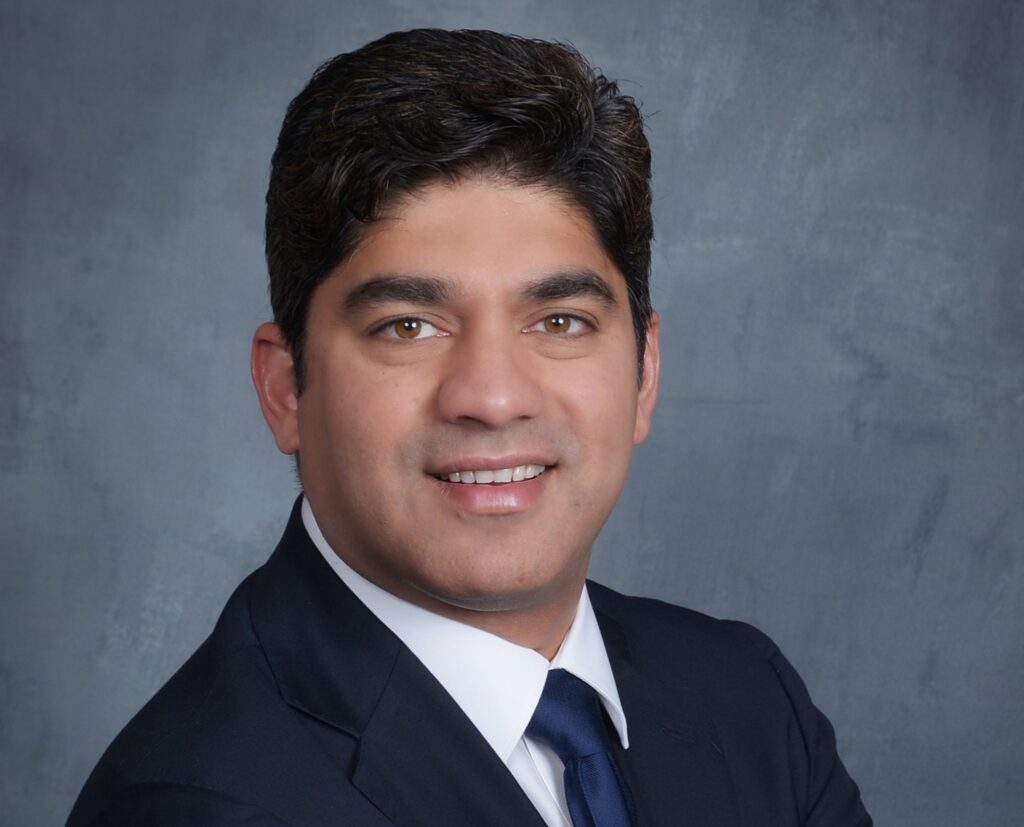
Rohan Sharma is a globally recognized authority on artificial intelligence governance, digital transformation, and enterprise risk, and a 2025 Aspen Institute Civic AI Leader. His work sits at the intersection of technology, public policy, and board-level decision-making, where he advises executives and institutions on the strategic, regulatory, and capital implications of advanced AI systems.
Mr. Sharma serves on the U.S. Technical Advisory Group to the International Organization for Standardization (ISO), contributing to the development of global AI safety and quality standards, and leads the Law Sub-committee of the ACM Technology Policy Committee, shaping legal and governance perspectives on emerging technologies. He is an Agenda Contributor to the World Economic Forum, an advisor to Stanford Seed, and has previously held senior leadership roles driving AI-enabled transformation at Apple, Disney, and Fortune 100 enterprises.
An author and public intellectual, Mr. Sharma wrote the Springer-published AI & the Boardroom, a widely cited text on AI governance and executive oversight that has been referenced by NATO, Google DeepMind, and peer-reviewed academic journals including Nature and Emerald. He is also the author of Minds of Machines and a frequent speaker at global C-suite forums, including TEDx Yale and The Atlantic CEO Summit.
Mr. Sharma serves as a a strategic advisor to UCLA Anderson, and a mentor with Techstars. He resides in California with his family.
MEDIA CONTACT
Name: Rohan Sharma
Title: Managing Principal, Zenolabs AI
Email: [email protected]
Phone: +1 (323) 236-8723
Website: http://www.rohansharma.net